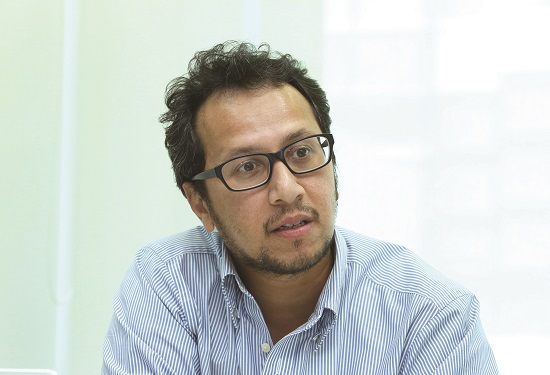
The Khazanah Research Institute's Director of Research Dr Muhammed Abdul Khalid uses the benchmark of car sales showing declining sales in the lower price range cars against major increases in luxury car sales as further proof that the income gap is widening betwen the rich and the rest of Malaysia. – The Malaysian Insider pic, August 11, 2015.
Tuesday, March 8, 2016
Forum on Malaysian economic issues
Wednesday, December 2, 2015
BAGAIMANA KITA TANPA SUBSIDI BERAS
MUHAMMED ABDUL KHALID | 02 Disember 2015 6:30 PM
BARU-BARU ini, kerajaan mengumumkan penghapusan program subsidi beras yang bermakna beras jenis ST15 akan dijual pada harga pasaran, dan tidak lagi pada harga subsidi. Beras ST15 adalah beras tempatan yang mempunyai kandungan 15 peratus beras hancur yang kualitinya sedikit rendah berbanding beras tempatan biasa ST15.
Ini bermakna tiada lagi subsidi sebanyak RM7.50 untuk sekampit beras jenis ST15. Adakah penghapusan program ini wajar, atau akan membebankan rakyat terutamanya golongan berpendapatan rendah?
Program ini bermula pada 2008, apabila harga padi pada masa itu telah naik tiga kali ganda kepada lebih AS$1,000 satu tan, berbanding hanya AS$335 tahun sebelumnya. Kerajaan memperkenalkan program ini bertujuan memastikan golongan berpendapatan rendah dapat membeli beras pada harga rendah.
Kos program subsidi ini bukannya sedikit. Pada tahun lepas, kerajaan memperuntukkan lebih kurang RM530 juta untuk program ini yang disalurkan melalui Kementerian Pertanian dan Industri Asas Tani. Sejak 2008 hingga tahun lepas, sebanyak RM3.4 bilion telah pun dibelanjakan.
Mengapa program ini diberhentikan? Hujah yang diberikan adalah kerana ketirisan dan pelaksanaan yang lemah apabila mereka yang membeli beras murah ini bukannya golongan miskin, tetapi pekerja asing, pekedai ataupun pemborong, dan juga pemilik-pemilik restoran.
Persoalannya, patutkah program subsidi beras ini dihentikan? Apakah kesan penghapusan program ini terhadap golongan miskin? Soalan pertama, patutkah ia dihentikan?
Jawapannya adalah ya. Jika kita lihat harga padi sekarang, lebih kurang AS$370/tan. Jika sebab utama kita perkenalkan subsidi beras adalah harga antarabangsa yang tinggi, namun hujah itu tidak lagi relevan. Harga padi pada masa sekarang tidak banyak bezanya dengan harga padi sebelum program subsidi ini dilancarkan. Maka, memang patutlah ia dihentikan.
Soalan kedua, apakah kesannya penghapusan subsidi ini terhadap orang miskin?
Jawapannya jelas, sudah tentu pengurangan subsidi beras akan meningkatkan kos sara hidup mereka, apatah lagi beras adalah makanan ruji rakyat negara ini. Ia tentu membebankan mereka, apatah lagi dalam keadaan kos hidup yang semakin meningkat, pada masa sama, subsidi tepung juga dihapuskan.
Apakah terdapat cara atau kaedah lain untuk meringankan beban akibat pemansuhan subsidi ini?
Terdapat dua cara; pertama, meneruskan program ini, tetapi dengan penambahbaikan sistem penyampaiannya, atau kedua, menghapuskan subsidi ini, dan menggantikannya dengan cash transfer ala Bantuan Rakyat 1Malaysia (BR1M).
Cadangan pertama adalah menyeluruh tetapi memakan masa kerana memerlukan penambahbaikan dan pemantauan sepenuhnya prosedur operasi standard (SOP). Ini bermaksud Kementerian Pertanian dan Industri Asas Tani haruslah mengkaji kembali penerima dan kuota yang diberikan kepada pemborong dan pengilang untuk membekalkan beras ST15 ini.
Peniaga dan penjual haruslah juga dipantau, dan mereka ini sebaik-baiknya dilantik terus oleh kementerian, dan bukannya oleh pengilang ataupun pengedar. Pemantauan berterusan penting supaya tiada penipuan terutamanya kes mencampur beras murah ST15 dengan beras yang lain, dan menjualnya pada harga tinggi. Isu penyeludupan beras haruslah juga dihapuskan.
Cadangan kedua lebih mudah. Subsidi beras dihapuskan tetapi untuk mengurangkan beban rakyat miskin yang terpaksa membeli pada harga tinggi, subsidi bulanan diberikan terus kepada golongan miskin, dalam bentuk wang tunai ataupun kupon beras. Tidak perlu lagi memberi kuota, memantau pengilang, pemborong ataupun peniaga. Ini bukan sahaja dapat mengurangkan kegiatan penyeludupan beras, kosnya jua jauh lebih rendah.
Jika setiap keluarga dalam golongan 20 terbawah (B20) iaitu seramai 1.3 juta keluarga diberikan wang tunai atau kupon bersamaan nilai dua kampit subsidi beras (RM15) setiap bulan, kos tahunan adalah RM240 juta - iaitu penjimatan sebanyak RM290 juta, atau hampir 120 peratus! Ini lebih berkesan kerana golongan sasaran akan terus mendapat bantuan ini malah kosnya juga lebih rendah. Mereka juga dapat membeli beras yang lebih berkualiti.
Ini adalah cadangan sementara. Tetapi ia penting dilakukan segera supaya rakyat terutamanya golongan miskin masih mampu membeli beras. Dalam pada itu, strategi jangka panjang juga perlu untuk memastikan pendapatan dan taraf hidup rakyat dapat ditingkatkan supaya mereka tidak lagi bergantung kepada subsidi atau bantuan kerajaan.
DR. MUHAMMED ABDUL KHALID ialah Penyelidik Khazanah Nasional.
link http://www.utusan.com.my/rencana/bagaimana-kita-tanpa-subsidi-beras-1.164602
Sunday, November 22, 2015
Borrowing just to survive
KUALA LUMPUR (Nov 16): The Ministry of Finance said in the Economic Report 2015/16 that household debt rose to 88.1% of nominal gross domestic product (GDP) in August from 86.8% at the end of last year, though it noted at the time that it grew at a more moderate rate than years prior, and assured that total household financial assets are still more than double the debts.
Time and again, Bank Negara Malaysia (BNM) highlighted that it had capped the household debt service ratio, or the percentage of loan obligations to take-home pay, to 30%.
However, Khazanah Research Institute (KRI) (pictured) director of research Dr Muhammed Abdul Khalid said this will not deter the low-income group from getting deeper into debt, as they can still turn to informal channels to borrow for consumption, like getting an “ansuran mudah” (easy payment) scheme to buy durable goods.
According to KRI’s State of Household Report, borrowings by this method to buy things like television sets, refrigerators or washing machines is expensive as the total interest paid over prices is as high as 162%. “This is very high, and it’s not captured by the data.”
“BNM said [the household debt level] is not much to worry about because aggregate-level household assets are more than loans. I suspect it is true for the higher income, not the lower income,” said Muhammed, who was also formerly head of economics at the Securities Commission Malaysia, in a recent interview with The Edge Financial Daily.
Economic Planning Unit data showed the top 20% households in the rural and urban parts of Peninsular Malaysia made up nearly half of the income share last year, at an average of 44.3%.
In an article published by KRI, entitled “Antara Dua Darjat”, it was shown that investment growth between Amanah Saham Bumiputera’s (ASB) top and bottom investors went in different directions. While total deposits grew by 13% from 2012 to 2014, the average deposit of the bottom 6.16 million investors — which made up 72% of ASB investors — fell by 12.3%.
As their deposits were miniscule, these investors’ average dividend was just RM45 in 2014 — or RM3.75 a month. “That’s only enough to get a breakfast of roti canai and teh tarik once a month,” said the article.
While the government debt level gets heavy scrutiny, there is comparatively less attention on Malaysia’s household debt, Muhammed said. Why is that, when Malaysia’s economy is heavily anchored on domestic demand, he questioned. Private consumption this year made up 52.71% of GDP this year, according to the Economic Report.
“The public debt limit of 55% of GDP is a self-imposed one. What happens when you break it? Nothing, although there will be some cost. Now, we are borrowing about RM630 billion, so an additional one basis point is just RM630 million — that is the extra cost. But household debt is much higher [at RM940.4 billion as at end-2014],” said Muhammed.
The Department of Statistics showed that the median monthly salary and wage in 2013 were just RM1,500. Last year, it was RM1,575.
“Meanwhile, Selangor’s median wage was RM2,000 last year, from RM1,980 in 2013. This means in the richest state, people get only RM20 extra per month. But count how much the increase is when divided by 30 days. And toll hikes for, say, [the] MEX highway, went up by RM1; [the] SILK highway by 80 sen. So, of course they feel [the pinch] when prices go up,” said Muhammed.
He disagreed with the perception that Malaysia’s consumer price index (CPI) is skewed due to inclusion of controlled items, as only few items in the entire 512 goods in the CPI basket are price-controlled items, and even then, they are only controlled during festive seasons. The CPI went up by 10% between September 2010 and September 2014. “We tend to get confused about [the] CPI; it captures the rate of change of prices, not the level of prices,” he added.
“But if you look at other big-ticket items, high-rise properties went up by 54%, terrace house 61%. Even [everyday goods] like ginger was up by 57%, kailan by 20% and sawi by 10% during the same period. People remember this. And people remember that toll prices [have] gone up as well,” he said, before adding that houses are not included in the CPI. Only rents are.
For low-income earners, Muhammed said it is normal for them to borrow for consumption. With many items’ prices increasing, this could just delay the low-earning people’s purchases of homes.
BNM’s Financial Stability and Payment Systems Report 2014 showed that total household loans were primarily mortgages (45.7%), while personal financing made up 15.7%. However, households which earned RM3,000 or less had a debt-to-income ratio of seven times, even though their total loan share was only 26.7%.
Apart from easy-payment schemes, Muhammed said low-income earners could turn to personal acquaintances or worse — loan sharks — to obtain credit. Forget the fact that ah longs charge exorbitant rates, Muhammed said these numbers are not included in official data. “So, we won’t know how much debt came from these informal sources,” he said.
Muhammed said these loans were usually for consumables or not backed by assets. The younger ones borrow to study, while the older ones for medication.
Former CIMB Investment Bank Bhd regional head of economic research Lee Heng Guie, meanwhile, said many in their 40s tend to borrow from loan sharks for their businesses’ short-term financing.
“Sometimes, these people need quick cash to help with their cash flow. Going to banks requires a lot of requirements and a longer process. So, these small business owners just go to the ah longs and use their possessions as collateral,” he said.
Both Lee and Muhammed agree that Malaysia’s household indebtedness will not be reduced anytime soon. “It will take a dramatic fall in loan growth or a sharp GDP rise to reduce the ratio,” said Lee.
Muhammed suggested that easy- payment schemes be disallowed from advertising low daily repayments and instead display the actual annual percentage rate (APR).
“Then, when people want to buy, say, those consumer durables that I mentioned earlier, they would know they are paying [a] total APR of more than 40%. So, they would then think twice. This can easily be done. It wouldn’t require cabinet decisions or to be tabled in Parliament. Ministers can just go and make an announcement that it’s banned beginning tomorrow.”
This article first appeared in The Edge Financial Daily, on Nov 16, 2015.
http://www.theedgeproperty.com.my/content/borrowing-just-surviveTuesday, August 11, 2015
Wage Gap Widening
Ever widening income disparity between rich Malaysians and the rest, says economist
BY SHERIDAN MAHAVERA The Malaysian Insider
Published: 11 August 2015 7:00 AM
The Khazanah Research Institute's Director of Research Dr Muhammed Abdul Khalid uses the benchmark of car sales showing declining sales in the lower price range cars against major increases in luxury car sales as further proof that the income gap is widening betwen the rich and the rest of Malaysia. – The Malaysian Insider pic, August 11, 2015.
Sunday, August 9, 2015
PUBLIC FORUM ALUMNI PTD - "11th MALAYSIA PLAN: ARE WE IN THE RIGHT DIRECTION?"
Malaysia household debt worrying
T K Letchumy Tamboo, Astro Awani |
August 09, 2015 15:55 MYT
KUALA LUMPUR: The household debt in Malaysia is very high compared to other countries is a cause of worry said economist Dr Muhammad Abdul Khalid.
He said 50 per cent of the income of Malaysians goes into paying debts.
Although this is acceptable for those with savings, it is worrying for Malaysians who do not have savings.
"What is alarming is that 90 per cent of Malaysians have no savings. And 70 per cent of those who have investment like Amanah Saham Berhad, only have RM500 in the accounts," he said at the 9th Malaysian Students Leaders Summit here, today.
"Young people coming out of university have debts of RM25,000. If they come from a foreign university, this figure is higher.
"Knowing this, the young people, who has no income, still spend their money for other things first before paying off their debt last. This should be first instead.
He said financial management among youths are also low.
However, he admitted that the while the government has done a lot to reduce household debts like setting up rules that one cannot take personal loan for more than 20 years, he said companies that offer loans should do much more.
"Companies that provide loans usually do not publish the full interest amounts when offering loans. They just publish weekly interest rates which are low and consumers fall for that," he said.
He said what is lacking now is financial and consumer literacy.
link http://english.astroawani.com/malaysia-news/malaysia-household-debt-worrying-69081
KUALA LUMPUR: The household debt in Malaysia is very high compared to other countries is a cause of worry said economist Dr Muhammad Abdul Khalid.
He said 50 per cent of the income of Malaysians goes into paying debts.
Although this is acceptable for those with savings, it is worrying for Malaysians who do not have savings.
"What is alarming is that 90 per cent of Malaysians have no savings. And 70 per cent of those who have investment like Amanah Saham Berhad, only have RM500 in the accounts," he said at the 9th Malaysian Students Leaders Summit here, today.
"Young people coming out of university have debts of RM25,000. If they come from a foreign university, this figure is higher.
"Knowing this, the young people, who has no income, still spend their money for other things first before paying off their debt last. This should be first instead.
He said financial management among youths are also low.
However, he admitted that the while the government has done a lot to reduce household debts like setting up rules that one cannot take personal loan for more than 20 years, he said companies that offer loans should do much more.
He said what is lacking now is financial and consumer literacy.
link http://english.astroawani.com/malaysia-news/malaysia-household-debt-worrying-69081
Subscribe to:
Posts (Atom)