Sunday, July 10, 2016

Berapa kenaikan gaji tahun lepas?

Berapa kenaikan gaji tahun lepas?
PENULIS ada bertanya kepada beberapa rakan mengenai persoalan di atas dan kebanyakan daripada mereka menjawab lima peratus.
Ada juga yang menggeleng kepala dan menjawab kosong peratus. Jawapannya tinggi sedikit; gaji penengah pekerja di Malaysia naik 6.5%, ataupun 4.4% setelah ditolak kadar inflasi.

Jika anda berasa ia ‘boleh tahan’, jangan lupa bahawa ia adalah bersamaan dengan kenaikan RM100 sebulan, daripada gaji penengah RM1,500 sebulan pada tahun 2014 kepada RM1,600 pada tahun lepas. Ya, RM100 sebulan.

Menurut Laporan Penyiasatan Gaji dan Upah 2015 yang dikeluarkan Jabatan Statistik Negara akhir bulan lepas, separuh daripada pekerja di Malaysia menerima gaji kurang dari RM1,600 sebulan.

Pekerja di Sabah berada di kedudukan yang paling teruk dengan gaji penengah berjumlah RM1,100 pada tahun lepas, ataupun hanya RM300 lebih daripada paras gaji minimum mereka.

Nasib pekerja yang bergaji sedikit bukan hanya fenomena di Sabah, malah di hampir kesemua negeri.

Hanya di Selangor, Putrajaya, dan Kuala Lumpur sahaja gaji penengah melepasi paras RM2,000 sebulan, manakala Putrajaya memperoleh gaji penengah tertinggi, iaitu RM2,967 sebulan. Tidak ada satu negeri pun di mana pekerjanya mendapat gaji penengah melebihi paras RM3,000 sebulan!

Negeri yang kaya dan maju seperti Pulau Pinang, Sarawak, Selangor dan Kuala Lumpur juga tidak menggambarkan bahawa pekerjanya mendapat gaji yang lumayan. Sebagai contoh, hampir separuh daripada pekerja di Pulau Pinang menerima gaji bulanan kurang dari RM1,700; Selangor, RM2,175 dan Sarawak, RM1,260 sebulan. Ini merupakan kenaikan sebanyak RM60 berbanding tahun sebelumnya.

Malah, negeri terkaya di Malaysia, Kuala Lumpur pun separuh daripada pekerjanya mendapat gaji kurang daripada RM2,200 sebulan.

Tidak semua pekerja mendapat kenaikan gaji sebanyak 6.5%. Jika diteliti peningkatan gaji pekerja di negeri yang kaya dan maju seperti Kuala Lumpur dan Pulau Pinang, gaji mereka langsung tidak bertambah. Gaji penengah di kedua-dua buah negeri ini pada tahun 2015 adalah sama seperti tahun 2014, tidak berganjak walaupun satu peratus.

Negeri yang kurang maju seperti Kedah juga menerima nasib yang hampir sama di mana pekerja penengah di negeri jelapang padi itu menerima kenaikan sebanyak RM20 pada tahun lepas. Malah, jika ditolak dengan kadar inflasi, pendapatan sebenar mereka merosot.

Tidak hairanlah yang teruk terjejas adalah mereka yang tinggal di ibu kota. Manakan tidak, gaji tidak naik, tetapi kos sara hidup melonjak secara mendadak.

Pada tahun lepas, kadar tol naik hampir 30% dan tambang LRT dan komuter naik di antara 36% hingga 57%.
Ini belum termasuk lagi dengan kenaikan harga makanan. Pada masa sama, subsidi makanan seperti padi dan tepung juga telah dihapuskan.

Mengapa ini berlaku? Nasib yang menimpa para pekerja bukanlah suatu misteri. Jika dilihat, ekonomi negara, walaupun masih berkembang, tetapi  mengucup sedikit pada tahun 2015 berbanding tahun sebelumnya, daripada 6% kepada 5%. Prestasi sektor korporat tidak memberangsangkan yang mana pendapatan korporat jatuh 12.1% pada tahun 2015 berbanding hanya 1.9% pada tahun 2014.

Ini memberi impak besar kepada pekerja, yang mana peratusan mereka tidak bekerja telah meningkat sebanyak 9.2% pada 2015. Lebih teruk lagi, peratusan pekerja yang telah diberhentikan meningkat 49% pada 2015 berbanding 2014, tertinggi sejak tahun 2010.

Persoalannya sekarang, adakah tahun 2016 akan memberi harapan dan sinar baharu untuk para pekerja di negara bertuah ini? Jawapannya bukan manis, tetapi pahit.

Prestasi ekonomi dunia dan negara dijangka berkembang pada paras lebih rendah berbanding 2015. Malah, ekonomi negara hanya mampu berkembang pada kadar 4.2% pada suku pertama tahun ini, peningkatan yang terburuk sejak enam tahun lalu.

Jualan runcit juga jatuh 4.4% pada suku pertama tahun ini, berbanding peningkatan 4.6% pada tahun lepas. Pasaran buruh masih lemah, jumlah mereka yang tidak bekerja semakin meningkat sepanjang lima bulan pertama tahun ini. Pendapatan korporat pada suku pertama tahun ini juga berkurangan berbanding tahun sebelumnya.

Sekilas pandang, harapan kenaikan gaji yang lebih tinggi untuk tahun 2016 adalah amatlah tipis sekali.

Harapan penulis hanya satu, janganlah lagi rakyat dibebankan dengan kenaikan tol, kadar elektrik, air, dan sebagainya. Lupakan sebentar niat untuk menaikkan harga, setidak-tidaknya sehingga ekonomi negara kembali pulih dan gaji pekerja meningkat sedikit.

http://www.sinarharian.com.my/karya/pendapat/berapa-kenaikan-gaji-tahun-lepas-1.539453

Wednesday, December 2, 2015

BAGAIMANA KITA TANPA SUBSIDI BERAS

MUHAMMED ABDUL KHALID  |  02 Disember 2015 6:30 PM

BARU-BARU ini, kerajaan mengumumkan penghapusan program subsidi beras yang bermakna beras jenis ST15 akan dijual pada harga pasaran, dan tidak lagi pada harga subsidi. Beras ST15 adalah beras tempatan yang mempunyai kandungan 15 peratus beras hancur yang kualitinya sedikit rendah berbanding beras tempatan biasa ST15.

Ini bermakna tiada lagi subsidi sebanyak RM7.50 untuk sekampit beras jenis ST15. Adakah penghapusan program ini wajar, atau akan membebankan rakyat terutamanya golongan berpendapatan rendah?

Program ini bermula pada 2008, apabila harga padi pada masa itu telah naik tiga kali ganda kepada lebih AS$1,000 satu tan, berban­ding hanya AS$335 tahun sebe­lumnya. Kerajaan memperkenalkan program ini bertujuan memastikan golongan berpendapatan rendah dapat membeli beras pada harga rendah.

Kos program subsidi ini bukannya sedikit. Pada tahun lepas, kerajaan memperuntukkan lebih kurang RM530 juta untuk program ini yang disalurkan melalui Kementerian Pertanian dan Industri Asas Tani. Sejak 2008 hingga tahun lepas, sebanyak RM3.4 bilion telah pun dibelanjakan.

Mengapa program ini diberhentikan? Hujah yang diberikan adalah kerana ketirisan dan pelaksanaan yang lemah apabila mereka yang membeli beras murah ini bukannya golongan miskin, tetapi pekerja a­sing, pekedai ataupun pemborong, dan juga pemilik-pemilik restoran.

Persoalannya, patutkah program subsidi beras ini dihentikan? Apakah kesan penghapusan program ini terhadap golongan miskin? Soalan pertama, patutkah ia dihentikan?

Jawapannya adalah ya. Jika kita lihat harga padi sekarang, lebih kurang AS$370/tan. Jika sebab utama kita perkenalkan subsidi beras adalah harga antarabangsa yang tinggi, namun hujah itu tidak lagi relevan. Harga padi pada masa sekarang tidak banyak bezanya dengan harga padi sebelum program subsidi ini dilancarkan. Maka, memang patutlah ia dihentikan.
Soalan kedua, apakah kesannya penghapusan subsidi ini terhadap orang miskin?

Jawapannya jelas, sudah tentu pengurangan subsidi beras akan meningkatkan kos sara hidup mereka, apatah lagi beras adalah makanan ruji rakyat negara ini. Ia tentu membebankan mereka, apatah lagi dalam keadaan kos hidup yang semakin meningkat, pada masa sama, subsidi tepung juga dihapuskan.

Apakah terdapat cara atau kaedah lain untuk meringankan beban akibat pemansuhan subsidi ini?

Terdapat dua cara; pertama, meneruskan program ini, tetapi dengan penambahbaikan sistem penyampaiannya, atau kedua, menghapuskan subsidi ini, dan menggantikannya dengan cash transfer ala Bantuan Rakyat 1Malaysia (BR1M).

Cadangan pertama adalah menyeluruh tetapi memakan masa kerana memerlukan penambahbaikan dan pemantauan sepenuhnya prosedur operasi standard (SOP). Ini bermaksud Kementerian Pertanian dan Industri Asas Tani haruslah mengkaji kembali pene­rima dan kuota yang diberikan kepada pemborong dan pengilang untuk membekalkan beras ST15 ini.

Peniaga dan penjual haruslah juga dipantau, dan mereka ini sebaik-baiknya dilantik terus oleh kementerian, dan bukannya oleh pengilang ataupun pengedar. Pemantauan berterusan penting supaya tiada penipuan terutamanya kes mencampur beras murah ST15 dengan beras yang lain, dan menjualnya pada harga tinggi. Isu penyeludupan beras haruslah juga dihapuskan.

Cadangan kedua lebih mudah. Subsidi beras dihapuskan tetapi untuk mengurangkan beban rakyat miskin yang terpaksa membeli pada harga tinggi, subsidi bulanan diberikan terus kepada golongan miskin, dalam bentuk wang tunai ataupun kupon beras. Tidak perlu lagi memberi kuota, memantau pengilang, pemborong ataupun peniaga. Ini bukan sahaja dapat mengurangkan kegiatan penyeludupan beras, kos­nya jua jauh lebih rendah.

Jika setiap keluarga dalam golong­an 20 terbawah (B20) iaitu seramai 1.3 juta keluarga diberikan wang tunai atau kupon bersamaan nilai dua kampit subsidi beras (RM15) setiap bulan, kos tahunan adalah RM240 juta - iaitu penjimat­an sebanyak RM290 juta, atau hampir 120 peratus! Ini lebih berkesan kerana golongan sasaran akan terus mendapat bantuan ini malah kos­nya juga lebih rendah. Mereka juga dapat membeli beras yang lebih berkualiti.

Ini adalah cadangan sementara. Tetapi ia penting dilakukan segera supaya rakyat terutamanya golong­an miskin masih mampu membeli beras. Dalam pada itu, strategi jangka panjang juga perlu untuk memastikan pendapatan dan taraf hidup rakyat dapat ditingkatkan supaya mereka tidak lagi bergantung kepada subsidi atau bantuan kerajaan.

DR. MUHAMMED ABDUL KHALID ialah Penyelidik Khazanah Nasional.

link http://www.utusan.com.my/rencana/bagaimana-kita-tanpa-subsidi-beras-1.164602

Sunday, November 22, 2015

Seminar : How Are You Malaysia?


Borrowing just to survive


Borrowing just to survive


KUALA LUMPUR (Nov 16): The Ministry of Finance said in the Economic Report 2015/16 that household debt rose to 88.1% of nominal gross domestic product (GDP) in August from 86.8% at the end of last year, though it noted at the time that it grew at a more moderate rate than years prior, and assured that total household financial assets are still more than double the debts.


Time and again, Bank Negara Malaysia (BNM) highlighted that it had capped the household debt service ratio, or the percentage of loan obligations to take-home pay, to 30%.
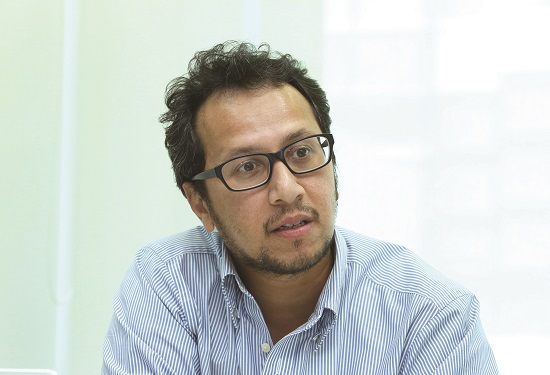
However, Khazanah Research Institute (KRI) (pictured) director of research Dr Muhammed Abdul Khalid said this will not deter the low-income group from getting deeper into debt, as they can still turn to informal channels to borrow for consumption, like getting an “ansuran mudah” (easy payment) scheme to buy durable goods.

Dr Muhammed Abdul Khalid


According to KRI’s State of Household Report, borrowings by this method to buy things like television sets, refrigerators or washing machines is expensive as the total interest paid over prices is as high as 162%. “This is very high, and it’s not captured by the data.”
“BNM said [the household debt level] is not much to worry about because aggregate-level household assets are more than loans. I suspect it is true for the higher income, not the lower income,” said Muhammed, who was also formerly head of economics at the Securities Commission Malaysia, in a recent interview with The Edge Financial Daily.
Economic Planning Unit data showed the top 20% households in the rural and urban parts of Peninsular Malaysia made up nearly half of the income share last year, at an average of 44.3%.
In an article published by KRI, entitled “Antara Dua Darjat”, it was shown that investment growth between Amanah Saham Bumiputera’s (ASB) top and bottom investors went in different directions. While total deposits grew by 13% from 2012 to 2014, the average deposit of the bottom 6.16 million investors — which made up 72% of ASB investors — fell by 12.3%.
As their deposits were miniscule, these investors’ average dividend was just RM45 in 2014 — or RM3.75 a month. “That’s only enough to get a breakfast of roti canai and teh tarik once a month,” said the article.
While the government debt level gets heavy scrutiny, there is comparatively less attention on Malaysia’s household debt, Muhammed said. Why is that, when Malaysia’s economy is heavily anchored on domestic demand, he questioned. Private consumption this year made up 52.71% of GDP this year, according to the Economic Report.
“The public debt limit of 55% of GDP is a self-imposed one. What happens when you break it? Nothing, although there will be some cost. Now, we are borrowing about RM630 billion, so an additional one basis point is just RM630 million — that is the extra cost. But household debt is much higher [at RM940.4 billion as at end-2014],” said Muhammed.
The Department of Statistics showed that the median monthly salary and wage in 2013 were just RM1,500. Last year, it was RM1,575.
“Meanwhile, Selangor’s median wage was RM2,000 last year, from RM1,980 in 2013. This means in the richest state, people get only RM20 extra per month. But count how much the increase is when divided by 30 days. And toll hikes for, say, [the] MEX highway, went up by RM1; [the] SILK highway by 80 sen. So, of course they feel [the pinch] when prices go up,” said Muhammed.
He disagreed with the perception that Malaysia’s consumer price index (CPI) is skewed due to inclusion of controlled items, as only few items in the entire 512 goods in the CPI basket are price-controlled items, and even then, they are only controlled during festive seasons. The CPI went up by 10% between September 2010 and September 2014. “We tend to get confused about [the] CPI; it captures the rate of change of prices, not the level of prices,” he added.
“But if you look at other big-ticket items, high-rise properties went up by 54%, terrace house 61%. Even [everyday goods] like ginger was up by 57%, kailan by 20% and sawi by 10% during the same period. People remember this. And people remember that toll prices [have] gone up as well,” he said, before adding that houses are not included in the CPI. Only rents are.
For low-income earners, Muhammed said it is normal for them to borrow for consumption. With many items’ prices increasing, this could just delay the low-earning people’s purchases of homes.
BNM’s Financial Stability and Payment Systems Report 2014 showed that total household loans were primarily mortgages (45.7%), while personal financing made up 15.7%. However, households which earned RM3,000 or less had a debt-to-income ratio of seven times, even though their total loan share was only 26.7%.
Apart from easy-payment schemes, Muhammed said low-income earners could turn to personal acquaintances or worse — loan sharks — to obtain credit. Forget the fact that ah longs charge exorbitant rates, Muhammed said these numbers are not included in official data. “So, we won’t know how much debt came from these informal sources,” he said.
Muhammed said these loans were usually for consumables or not backed by assets. The younger ones borrow to study, while the older ones for medication.
Former CIMB Investment Bank Bhd regional head of economic research Lee Heng Guie, meanwhile, said many in their 40s tend to borrow from loan sharks for their businesses’ short-term financing.
“Sometimes, these people need quick cash to help with their cash flow. Going to banks requires a lot of requirements and a longer process. So, these small business owners just go to the ah longs and use their possessions as collateral,” he said.
Both Lee and Muhammed agree that Malaysia’s household indebtedness will not be reduced anytime soon. “It will take a dramatic fall in loan growth or a sharp GDP rise to reduce the ratio,” said Lee.
Muhammed suggested that easy- payment schemes be disallowed from advertising low daily repayments and instead display the actual annual percentage rate (APR).
“Then, when people want to buy, say, those consumer durables that I mentioned earlier, they would know they are paying [a] total APR of more than 40%. So, they would then think twice. This can easily be done. It wouldn’t require cabinet decisions or to be tabled in Parliament. Ministers can just go and make an announcement that it’s banned beginning tomorrow.”

This article first appeared in The Edge Financial Daily, on Nov 16, 2015. 
http://www.theedgeproperty.com.my/content/borrowing-just-survive


Tuesday, August 11, 2015

Wage Gap Widening

Ever widening income disparity between rich Malaysians and the rest, says economist 


The Khazanah Research Institute's Director of Research Dr Muhammed Abdul Khalid uses the benchmark of car sales showing declining sales in the lower price range cars against major increases in luxury car sales as further proof that the income gap is widening betwen the rich and the rest of Malaysia. – The Malaysian Insider pic, August 11, 2015.


The Khazanah Research Institute's Director of Research Dr Muhammed Abdul Khalid uses the benchmark of car sales showing declining sales in the lower price range cars against major increases in luxury car sales as further proof that the income gap is widening betwen the rich and the rest of Malaysia. – The Malaysian Insider pic, August 11, 2015.
The income gap between top earning Malaysian individuals and everyone else is widening, an economist with a local think tank said, even though income disparity between households has gone down.
Dr Muhammed Abdul Khalid said some indicators of this are how luxury car and home sales have gone up, and are still buoyant compared with sales of the middle and low-end range of these products.
The sales for luxury big ticket items are also happening at a time when overall consumer sentiment is weak due to inflation and a slow economy, said Muhammed, who is attached to the Khazanah Research Institute.
“Car sales in Malaysia are down but for Porsche it is up by 180%. Proton is down 22% and Naza down by 100%, but for Mercedes it is up 44%. 
“The high end cars are selling like hot cakes and the lower end is dropping. The rich are ok. The low (income) have a problem,” Muhammed said on the sidelines of the Malaysian Student Leaders Summit in Kuala Lumpur on Sunday.
The same he said, was happening with more high-end houses being developed and sold compared with medium- to low-end ranged houses.
Putrajaya aims to reduce income disparity between the bottom 40% and the top 20% of households as part of the 11th Malaysia Plan (11MP).
Experts have questioned whether the 11MP can reach these targets as the country must consistently grow the economy at a rate of 5% each year till 2020.
Economists have recently predicted that Malaysia's GDP growth for 2015 will be around 4% or slightly higher.
Concentrated wealth
At the forum, Muhammed said average growth of individual wages last year only registered between 2% and 3%.
In Selangor, overall individual income growth was negative as the rise in cost of living, outstripped the growth in wages.
A typical worker in Selangor saw his income grow by an average RM20 a month. But when petrol prices went up by 10 sen, this translated into roughly a RM32 increase in spending on petrol per month, he said.
“So essentially, the rise in income for the average Selangor worker was wiped out by the increase in expenses,” Muhammad told the student leaders forum.
Individual income is derived from the wages and assets for one worker. Household income refers to total income from salaries, assets and welfare aid such as the People’s Aid Scheme (BR1M) for one household.
According to the Statistics Department, a typical Malaysian household has 4.4 members.
While income disparity between households in Malaysia is declining, Muhammad said, there were still wide differences between households depending on region.
Incomes and living standards in Kuala Lumpur, for instance, were on par with South Korea, but still lower in poorer states such as Kelantan and Kedah.
“The people of Kelantan for instance have income levels that are nearer to people in Sri Lanka.” 
If these disparities continued, Malaysia’s aim to become a high income nation by 2020 would be meaningless as the added prosperity would only be felt by those in places such as Kuala Lumpur and Selangor. – August 11, 2015.

Sunday, August 9, 2015

PUBLIC FORUM ALUMNI PTD - "11th MALAYSIA PLAN: ARE WE IN THE RIGHT DIRECTION?"


OPEN TO THE PUBLIC


Malaysia household debt worrying

T K Letchumy Tamboo, Astro Awani | Published on August 09, 2015 15:55 MYT

KUALA LUMPUR: The household debt in Malaysia is very high compared to other countries is a cause of worry said economist Dr Muhammad Abdul Khalid.

He said 50 per cent of the income of Malaysians goes into paying debts.

Although this is acceptable for those with savings, it is worrying for Malaysians who do not have savings.

"What is alarming is that 90 per cent of Malaysians have no savings. And 70 per cent of those who have investment like Amanah Saham Berhad, only have RM500 in the accounts," he said at the 9th Malaysian Students Leaders Summit here, today.

"Young people coming out of university have debts of RM25,000. If they come from a foreign university, this figure is higher.

"Knowing this, the young people, who has no income, still spend their money for other things first before paying off their debt last. This should be first instead.

He said financial management among youths are also low.

However, he admitted that the while the government has done a lot to reduce household debts like setting up rules that one cannot take personal loan for more than 20 years, he said companies that offer loans should do much more.
"Companies that provide loans usually do not publish the full interest amounts when offering loans. They just publish weekly interest rates which are low and consumers fall for that," he said.

He said what is lacking now is financial and consumer literacy.

link http://english.astroawani.com/malaysia-news/malaysia-household-debt-worrying-69081

Recent Events


Thursday, June 11, 2015

What must we do about inequality

Since the introduction of the New Economic Policy (NEP) in 1970, Malaysia has been a global leader in recognising the need for inclusivity in economic and social policy, as well as in the implementation of policies to achieve greater horizontal (or group) equality.
The NEP has two objectives: to reduce and eventually eliminate poverty, and to accelerate the process of restructuring Malaysian society to correct imbalance so as to reduce and eventually eliminate the identification of race with economic function.
In both objectives, Malaysia has been outstandingly successful. This performance deserves recognition and respect. Malaysia’s success on the three fronts – growth, poverty reduction, and improvements in horizontal equality – over a prolonged period is one of the best in the world.
Global leader. Outstandingly successful. Deserves recognition and respect. Best in the world.
These potent words run in contrast to public perception and discourse, which seem to inhabit a different world – the policy has failed, poverty remains high, and income inequality is widely said to be increasing, or persisting at high levels. 
But those sentences in the first paragraph are not ours. They belong to Francis Stewart, the Professor Emeritus of Development Economics from University of Oxford, who wrote them as foreword for the Malaysia Human Development Report 2013.
It is of interest to note at this point the results of empirical analysis undertaken by the UNDP NHDR Malaysia 2013 team regarding the impact of NEP on growth, poverty and inequality.
Malaysia’s achievements are a matter of record. While almost half of the population was in poverty in 1970, the poverty rate has since dropped dramatically to 16.5% in 1990, and 1.7% in 2012.
The reduction in poverty was evident across all groups. The notion that the policy failed or benefited small groups of people is factually incorrect. The success in poverty eradication is acknowledged by World Bank where it stated that "the initial implementation of the NEP helped increase educational and employment opportunities for poor households, supporting poverty reduction during the period"[1].
The success of poverty eradication has been due to an increase in household income for the population. From 1970-2012, the average household income grew by 7.3% annually. A comparison by income class shows that the bottom 40% of income earners enjoyed the highest income growth, at 7.9%, higher than the 6.9% registered for the top 20% and the 7.5% for middle income households. Inequality, therefore, dropped.
The Gini coefficient, a standard measurement of income inequality, also decreased by 16% during the same period.
It is without doubt that Malaysia has achieved a level of social equality barely imagined nearly half a decade ago. It is rather an impressive achievement considering that the total cost for poverty eradication and restructuring of policy is relatively small, about 5% of total expenditure of the Malaysian government from 1970 to 2012.
However, the NEP’s success brings new challenges, and the work remains unfinished.
One, income inequality remains at a level that is almost the same as the past two decades despite a continuous increase in economic growth.
Two, income and poverty among Bumiputera communities remain high, and pockets of marginalisation prevail in both rural and urban areas.
Three, new inequalities have emerged, especially in asset ownership. Asset inequality, especially in financial assets, shows wider gaps compared with income inequality.
Four, there remains exclusion in the labour market, both in public and private sector. There is evidence that ethnicity, and to some extend gender, exerts influence over employment, which pose questions towards inclusiveness in the work place. 
Five, the size of the middle class in Malaysia remains small, and barely budged in the past two decades. By conventional income-based definition, the middle class in Malaysia currently stands at 22% compared with 20% in 1989.
Moving forward, it is plausible that economic inequality could widen in Malaysia in the near future given current challenges in the labour market, changes in education policy, and consolidation of fiscal policy to reduce the federal deficit.
What then must we do? While there is no silver bullet and since defeatism will only guarantee defeat, there are several policy reforms that can be adopted to promote inclusive development in Malaysia.
These include fiscal policies to increase spending on health and education, access to affordable housing and quality education, targeted transfers to low income households, and implement fair and progressive taxation.
Labour market reforms can be simultaneously undertaken to boost the labour share of total income and ensuring equality of opportunities and fairness of employment practices, and, at the same time, reduce the size of foreign labour.
There is also room for financial reforms in ensuring our financial system is more inclusive. Finally, and equally vital, is the social policy reform.
A few measures can be undertaken, such as implementing unemployment insurance, focus on asset ownership especially housing, and strengthening of social safety net provisions including enhanced old age pensions.
Importantly, however, there is an urgent need to broaden our development paradigm beyond economic growth or stock market performances.
We must view development as representing a transformation of our society. GDP growth or a rising level of stock market are necessary, but not sufficient to achieve development and freedom from poverty, exclusion, and a more equitable and just society.
Ignorance is unfortunately not bliss, as failure to ensure inclusiveness could be fatal, be it in economic, social, or in political domains, as history has repeatedly shown.
Persistence of inequality over a prolonged period of time or across generations could not only lower economic growth and simultaneously diminish channels of upward mobility but would also possibly incite anger and raise questions with regards to the notion of fairness.
More generally, societies may experience a widening mistrust of institutions, including the government itself and a sense of despondency towards the status quo and the prospects of positive change. 
The report from UNDP evidently issues a clarion call for inclusive development to be increasingly incorporated into policy and academic discourses in Malaysia. – June 11, 2015.
* Dr Muhammed Abdul Khalid a director of research at Khazanah Research Institute and Tan Sri Dr Kamal Salih is adjunct professor of Economics and Development Studies at Universiti Malaya.

Friday, May 29, 2015

The ‘Guardians’ Who Have Betrayed The Nation’s Trust

Their “bebalism” — or collective stupidity, as coined by another great Malay intellectual, Professor Syed Husin Alatas, has grievously tarnished the reputation of their cohorts, and the younger generation. Kerana nila setitik rosak susu sebelanga


Wednesday, May 20, 2015

Bumi Unit Trust Holders — A Tale Of 2 Classes


Majority of Bumiputeras, or specifically the bottom 72% of ASB unit holders, only recorded average savings of RM536 in their ASB accounts last year, a measly amount that is not even near RM1,000.
Not only is the number miniscule, it is also decreasing, by 12% since 2012, which is in reverse of the rising trend in overall savings of total ASB unit holders.

Monday, May 11, 2015

Berani jika bersalah, Kecut takut kerana benar

In this turbulent times, perhaps it is worth reflecting this  sajak by the great Usman Awang 


Melayu - Usman Awang

Melayu itu orang yang bijaksana
Nakalnya bersulam jenaka
Budi bahasanya tidak terkira
Kurang ajarnya tetap santun
Jika menipu pun masih bersopan
Bila mengampu bijak beralas tangan.

Melayu itu berani jika bersalah
Kecut takut kerana benar,
Janji simpan di perut
Selalu pecah di mulut,
Biar mati adat
Jangan mati anak


Melayu di tanah Semenanjung luas maknanya:
Jawa itu Melayu,
Bugis itu Melayu,
Banjar juga disebut Melayu,
Minangkabau memang Melayu,
Keturunan Acheh adalah Melayu,
Jakun dan Sakai asli Melayu,
Arab dan Pakistani, semua Melayu,
Mamak dan Malbari serap ke Melayu,
Malah muallaf bertakrif Melayu
(Setelah disunat anunya itu)


Dalam sejarahnya
Melayu itu pengembara lautan
Melorongkan jalur sejarah zaman
Begitu luas daerah sempadan
Sayangnya kini segala kehilangan


Melayu itu kaya falsafahnya
Kias kata bidal pusaka
Akar budi bersulamkan daya
Gedung akal laut bicara


Malangnya Melayu itu kuat bersorak
Terlalu ghairah pesta temasya
Sedangkan kampung telah tergadai
Sawah sejalur tinggal sejengkal
Tanah sebidang mudah terjual
Meski telah memiliki telaga
Tangan masih memegang tali
Sedang orang mencapai timba
Berbuahlah pisang tiga kali


Melayu itu masih bermimpi
Walaupun sudah mengenal universiti
Masih berdagang di rumah sendiri
Berkelahi cara Melayu
Menikam dengan pantun
Menyanggah dengan senyum
Marahnya dengan diam
Merendah bukan menyembah
Meninggi bukan melonjak


Watak Melayu menolak permusuhan
Setia dan sabar tiada sempadan
Tapi jika marah tak nampak telinga
Musuh di cari ke lubang cacing
Tak dapat tanduk telinga dijinjing


Maruah dan agama dihina jangan
Hebat amuknya tak kenal lawan
Berdamai cara Melayu indah sekali
Silaturahim hati yang murni
Maaf diungkap sentiasa bersahut
Tangan dihulur sentiasa disambut
Luka pun tidak lagi berparut


Baiknya hati Melayu itu tak terbandingkan
Selagi yang ada sanggup diberikan
Sehingga tercipta sebuah kiasan:

Dagang lalu nasi ditanakkan
Suami pulang lapar tak makan
Kera di hutan disusu-susukan
Anak di pangkuan mati kebuluran


Bagaimanakah Melayu abad kedua puluh satu
Masihkah tunduk tersipu-sipu?
Jangan takut melanggar pantang
Jika pantang menghalang kemajuan;
Jangan segan menentang larangan
Jika yakin kepada kebenaran;
Jangan malu mengucapkan keyakinan
Jika percaya kepada keadilan
Jadilah bangsa yang bijaksana
Memegang tali memegang timba
Memiliki ekonomi mencipta budaya
Menjadi tuan di negara merdeka.


-end-