Sunday, November 22, 2015

Seminar : How Are You Malaysia?


Borrowing just to survive


Borrowing just to survive


KUALA LUMPUR (Nov 16): The Ministry of Finance said in the Economic Report 2015/16 that household debt rose to 88.1% of nominal gross domestic product (GDP) in August from 86.8% at the end of last year, though it noted at the time that it grew at a more moderate rate than years prior, and assured that total household financial assets are still more than double the debts.


Time and again, Bank Negara Malaysia (BNM) highlighted that it had capped the household debt service ratio, or the percentage of loan obligations to take-home pay, to 30%.
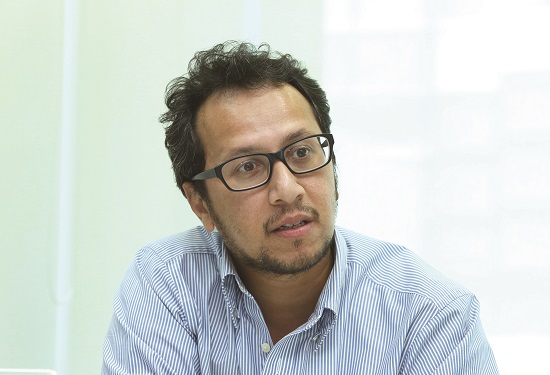
However, Khazanah Research Institute (KRI) (pictured) director of research Dr Muhammed Abdul Khalid said this will not deter the low-income group from getting deeper into debt, as they can still turn to informal channels to borrow for consumption, like getting an “ansuran mudah” (easy payment) scheme to buy durable goods.

Dr Muhammed Abdul Khalid


According to KRI’s State of Household Report, borrowings by this method to buy things like television sets, refrigerators or washing machines is expensive as the total interest paid over prices is as high as 162%. “This is very high, and it’s not captured by the data.”
“BNM said [the household debt level] is not much to worry about because aggregate-level household assets are more than loans. I suspect it is true for the higher income, not the lower income,” said Muhammed, who was also formerly head of economics at the Securities Commission Malaysia, in a recent interview with The Edge Financial Daily.
Economic Planning Unit data showed the top 20% households in the rural and urban parts of Peninsular Malaysia made up nearly half of the income share last year, at an average of 44.3%.
In an article published by KRI, entitled “Antara Dua Darjat”, it was shown that investment growth between Amanah Saham Bumiputera’s (ASB) top and bottom investors went in different directions. While total deposits grew by 13% from 2012 to 2014, the average deposit of the bottom 6.16 million investors — which made up 72% of ASB investors — fell by 12.3%.
As their deposits were miniscule, these investors’ average dividend was just RM45 in 2014 — or RM3.75 a month. “That’s only enough to get a breakfast of roti canai and teh tarik once a month,” said the article.
While the government debt level gets heavy scrutiny, there is comparatively less attention on Malaysia’s household debt, Muhammed said. Why is that, when Malaysia’s economy is heavily anchored on domestic demand, he questioned. Private consumption this year made up 52.71% of GDP this year, according to the Economic Report.
“The public debt limit of 55% of GDP is a self-imposed one. What happens when you break it? Nothing, although there will be some cost. Now, we are borrowing about RM630 billion, so an additional one basis point is just RM630 million — that is the extra cost. But household debt is much higher [at RM940.4 billion as at end-2014],” said Muhammed.
The Department of Statistics showed that the median monthly salary and wage in 2013 were just RM1,500. Last year, it was RM1,575.
“Meanwhile, Selangor’s median wage was RM2,000 last year, from RM1,980 in 2013. This means in the richest state, people get only RM20 extra per month. But count how much the increase is when divided by 30 days. And toll hikes for, say, [the] MEX highway, went up by RM1; [the] SILK highway by 80 sen. So, of course they feel [the pinch] when prices go up,” said Muhammed.
He disagreed with the perception that Malaysia’s consumer price index (CPI) is skewed due to inclusion of controlled items, as only few items in the entire 512 goods in the CPI basket are price-controlled items, and even then, they are only controlled during festive seasons. The CPI went up by 10% between September 2010 and September 2014. “We tend to get confused about [the] CPI; it captures the rate of change of prices, not the level of prices,” he added.
“But if you look at other big-ticket items, high-rise properties went up by 54%, terrace house 61%. Even [everyday goods] like ginger was up by 57%, kailan by 20% and sawi by 10% during the same period. People remember this. And people remember that toll prices [have] gone up as well,” he said, before adding that houses are not included in the CPI. Only rents are.
For low-income earners, Muhammed said it is normal for them to borrow for consumption. With many items’ prices increasing, this could just delay the low-earning people’s purchases of homes.
BNM’s Financial Stability and Payment Systems Report 2014 showed that total household loans were primarily mortgages (45.7%), while personal financing made up 15.7%. However, households which earned RM3,000 or less had a debt-to-income ratio of seven times, even though their total loan share was only 26.7%.
Apart from easy-payment schemes, Muhammed said low-income earners could turn to personal acquaintances or worse — loan sharks — to obtain credit. Forget the fact that ah longs charge exorbitant rates, Muhammed said these numbers are not included in official data. “So, we won’t know how much debt came from these informal sources,” he said.
Muhammed said these loans were usually for consumables or not backed by assets. The younger ones borrow to study, while the older ones for medication.
Former CIMB Investment Bank Bhd regional head of economic research Lee Heng Guie, meanwhile, said many in their 40s tend to borrow from loan sharks for their businesses’ short-term financing.
“Sometimes, these people need quick cash to help with their cash flow. Going to banks requires a lot of requirements and a longer process. So, these small business owners just go to the ah longs and use their possessions as collateral,” he said.
Both Lee and Muhammed agree that Malaysia’s household indebtedness will not be reduced anytime soon. “It will take a dramatic fall in loan growth or a sharp GDP rise to reduce the ratio,” said Lee.
Muhammed suggested that easy- payment schemes be disallowed from advertising low daily repayments and instead display the actual annual percentage rate (APR).
“Then, when people want to buy, say, those consumer durables that I mentioned earlier, they would know they are paying [a] total APR of more than 40%. So, they would then think twice. This can easily be done. It wouldn’t require cabinet decisions or to be tabled in Parliament. Ministers can just go and make an announcement that it’s banned beginning tomorrow.”

This article first appeared in The Edge Financial Daily, on Nov 16, 2015. 
http://www.theedgeproperty.com.my/content/borrowing-just-survive


Tuesday, August 11, 2015

Wage Gap Widening

Ever widening income disparity between rich Malaysians and the rest, says economist 


The Khazanah Research Institute's Director of Research Dr Muhammed Abdul Khalid uses the benchmark of car sales showing declining sales in the lower price range cars against major increases in luxury car sales as further proof that the income gap is widening betwen the rich and the rest of Malaysia. – The Malaysian Insider pic, August 11, 2015.


The Khazanah Research Institute's Director of Research Dr Muhammed Abdul Khalid uses the benchmark of car sales showing declining sales in the lower price range cars against major increases in luxury car sales as further proof that the income gap is widening betwen the rich and the rest of Malaysia. – The Malaysian Insider pic, August 11, 2015.
The income gap between top earning Malaysian individuals and everyone else is widening, an economist with a local think tank said, even though income disparity between households has gone down.
Dr Muhammed Abdul Khalid said some indicators of this are how luxury car and home sales have gone up, and are still buoyant compared with sales of the middle and low-end range of these products.
The sales for luxury big ticket items are also happening at a time when overall consumer sentiment is weak due to inflation and a slow economy, said Muhammed, who is attached to the Khazanah Research Institute.
“Car sales in Malaysia are down but for Porsche it is up by 180%. Proton is down 22% and Naza down by 100%, but for Mercedes it is up 44%. 
“The high end cars are selling like hot cakes and the lower end is dropping. The rich are ok. The low (income) have a problem,” Muhammed said on the sidelines of the Malaysian Student Leaders Summit in Kuala Lumpur on Sunday.
The same he said, was happening with more high-end houses being developed and sold compared with medium- to low-end ranged houses.
Putrajaya aims to reduce income disparity between the bottom 40% and the top 20% of households as part of the 11th Malaysia Plan (11MP).
Experts have questioned whether the 11MP can reach these targets as the country must consistently grow the economy at a rate of 5% each year till 2020.
Economists have recently predicted that Malaysia's GDP growth for 2015 will be around 4% or slightly higher.
Concentrated wealth
At the forum, Muhammed said average growth of individual wages last year only registered between 2% and 3%.
In Selangor, overall individual income growth was negative as the rise in cost of living, outstripped the growth in wages.
A typical worker in Selangor saw his income grow by an average RM20 a month. But when petrol prices went up by 10 sen, this translated into roughly a RM32 increase in spending on petrol per month, he said.
“So essentially, the rise in income for the average Selangor worker was wiped out by the increase in expenses,” Muhammad told the student leaders forum.
Individual income is derived from the wages and assets for one worker. Household income refers to total income from salaries, assets and welfare aid such as the People’s Aid Scheme (BR1M) for one household.
According to the Statistics Department, a typical Malaysian household has 4.4 members.
While income disparity between households in Malaysia is declining, Muhammad said, there were still wide differences between households depending on region.
Incomes and living standards in Kuala Lumpur, for instance, were on par with South Korea, but still lower in poorer states such as Kelantan and Kedah.
“The people of Kelantan for instance have income levels that are nearer to people in Sri Lanka.” 
If these disparities continued, Malaysia’s aim to become a high income nation by 2020 would be meaningless as the added prosperity would only be felt by those in places such as Kuala Lumpur and Selangor. – August 11, 2015.

Sunday, August 9, 2015

PUBLIC FORUM ALUMNI PTD - "11th MALAYSIA PLAN: ARE WE IN THE RIGHT DIRECTION?"


OPEN TO THE PUBLIC


Malaysia household debt worrying

T K Letchumy TambooAstro Awani | Published on August 09, 2015 15:55 MYT

KUALA LUMPUR: The household debt in Malaysia is very high compared to other countries is a cause of worry said economist Dr Muhammad Abdul Khalid.

He said 50 per cent of the income of Malaysians goes into paying debts.

Although this is acceptable for those with savings, it is worrying for Malaysians who do not have savings.

"What is alarming is that 90 per cent of Malaysians have no savings. And 70 per cent of those who have investment like Amanah Saham Berhad, only have RM500 in the accounts," he said at the 9th Malaysian Students Leaders Summit here, today.

"Young people coming out of university have debts of RM25,000. If they come from a foreign university, this figure is higher.

"Knowing this, the young people, who has no income, still spend their money for other things first before paying off their debt last. This should be first instead.

He said financial management among youths are also low.

However, he admitted that the while the government has done a lot to reduce household debts like setting up rules that one cannot take personal loan for more than 20 years, he said companies that offer loans should do much more.
"Companies that provide loans usually do not publish the full interest amounts when offering loans. They just publish weekly interest rates which are low and consumers fall for that," he said.

He said what is lacking now is financial and consumer literacy.

link http://english.astroawani.com/malaysia-news/malaysia-household-debt-worrying-69081

Recent Events


Thursday, June 11, 2015

What must we do about inequality

Since the introduction of the New Economic Policy (NEP) in 1970, Malaysia has been a global leader in recognising the need for inclusivity in economic and social policy, as well as in the implementation of policies to achieve greater horizontal (or group) equality.
The NEP has two objectives: to reduce and eventually eliminate poverty, and to accelerate the process of restructuring Malaysian society to correct imbalance so as to reduce and eventually eliminate the identification of race with economic function.
In both objectives, Malaysia has been outstandingly successful. This performance deserves recognition and respect. Malaysia’s success on the three fronts – growth, poverty reduction, and improvements in horizontal equality – over a prolonged period is one of the best in the world.
Global leader. Outstandingly successful. Deserves recognition and respect. Best in the world.
These potent words run in contrast to public perception and discourse, which seem to inhabit a different world – the policy has failed, poverty remains high, and income inequality is widely said to be increasing, or persisting at high levels. 
But those sentences in the first paragraph are not ours. They belong to Francis Stewart, the Professor Emeritus of Development Economics from University of Oxford, who wrote them as foreword for the Malaysia Human Development Report 2013.
It is of interest to note at this point the results of empirical analysis undertaken by the UNDP NHDR Malaysia 2013 team regarding the impact of NEP on growth, poverty and inequality.
Malaysia’s achievements are a matter of record. While almost half of the population was in poverty in 1970, the poverty rate has since dropped dramatically to 16.5% in 1990, and 1.7% in 2012.
The reduction in poverty was evident across all groups. The notion that the policy failed or benefited small groups of people is factually incorrect. The success in poverty eradication is acknowledged by World Bank where it stated that "the initial implementation of the NEP helped increase educational and employment opportunities for poor households, supporting poverty reduction during the period"[1].
The success of poverty eradication has been due to an increase in household income for the population. From 1970-2012, the average household income grew by 7.3% annually. A comparison by income class shows that the bottom 40% of income earners enjoyed the highest income growth, at 7.9%, higher than the 6.9% registered for the top 20% and the 7.5% for middle income households. Inequality, therefore, dropped.
The Gini coefficient, a standard measurement of income inequality, also decreased by 16% during the same period.
It is without doubt that Malaysia has achieved a level of social equality barely imagined nearly half a decade ago. It is rather an impressive achievement considering that the total cost for poverty eradication and restructuring of policy is relatively small, about 5% of total expenditure of the Malaysian government from 1970 to 2012.
However, the NEP’s success brings new challenges, and the work remains unfinished.
One, income inequality remains at a level that is almost the same as the past two decades despite a continuous increase in economic growth.
Two, income and poverty among Bumiputera communities remain high, and pockets of marginalisation prevail in both rural and urban areas.
Three, new inequalities have emerged, especially in asset ownership. Asset inequality, especially in financial assets, shows wider gaps compared with income inequality.
Four, there remains exclusion in the labour market, both in public and private sector. There is evidence that ethnicity, and to some extend gender, exerts influence over employment, which pose questions towards inclusiveness in the work place. 
Five, the size of the middle class in Malaysia remains small, and barely budged in the past two decades. By conventional income-based definition, the middle class in Malaysia currently stands at 22% compared with 20% in 1989.
Moving forward, it is plausible that economic inequality could widen in Malaysia in the near future given current challenges in the labour market, changes in education policy, and consolidation of fiscal policy to reduce the federal deficit.
What then must we do? While there is no silver bullet and since defeatism will only guarantee defeat, there are several policy reforms that can be adopted to promote inclusive development in Malaysia.
These include fiscal policies to increase spending on health and education, access to affordable housing and quality education, targeted transfers to low income households, and implement fair and progressive taxation.
Labour market reforms can be simultaneously undertaken to boost the labour share of total income and ensuring equality of opportunities and fairness of employment practices, and, at the same time, reduce the size of foreign labour.
There is also room for financial reforms in ensuring our financial system is more inclusive. Finally, and equally vital, is the social policy reform.
A few measures can be undertaken, such as implementing unemployment insurance, focus on asset ownership especially housing, and strengthening of social safety net provisions including enhanced old age pensions.
Importantly, however, there is an urgent need to broaden our development paradigm beyond economic growth or stock market performances.
We must view development as representing a transformation of our society. GDP growth or a rising level of stock market are necessary, but not sufficient to achieve development and freedom from poverty, exclusion, and a more equitable and just society.
Ignorance is unfortunately not bliss, as failure to ensure inclusiveness could be fatal, be it in economic, social, or in political domains, as history has repeatedly shown.
Persistence of inequality over a prolonged period of time or across generations could not only lower economic growth and simultaneously diminish channels of upward mobility but would also possibly incite anger and raise questions with regards to the notion of fairness.
More generally, societies may experience a widening mistrust of institutions, including the government itself and a sense of despondency towards the status quo and the prospects of positive change. 
The report from UNDP evidently issues a clarion call for inclusive development to be increasingly incorporated into policy and academic discourses in Malaysia. – June 11, 2015.
Dr Muhammed Abdul Khalid a director of research at Khazanah Research Institute and Tan Sri Dr Kamal Salih is adjunct professor of Economics and Development Studies at Universiti Malaya.